TRACK LISTING
02. Bronco Freight Train
03.
04. The Feeling I Know
05. Zoot Suit Riot
06. Old Sins Have Long Shadows
07.
08.
09. The Sea Of Emotion Pt. 2
10. The Sea Of Emotion Pt. 3 / Reflections On A Year And A Half
ABOUT THE ALBUM
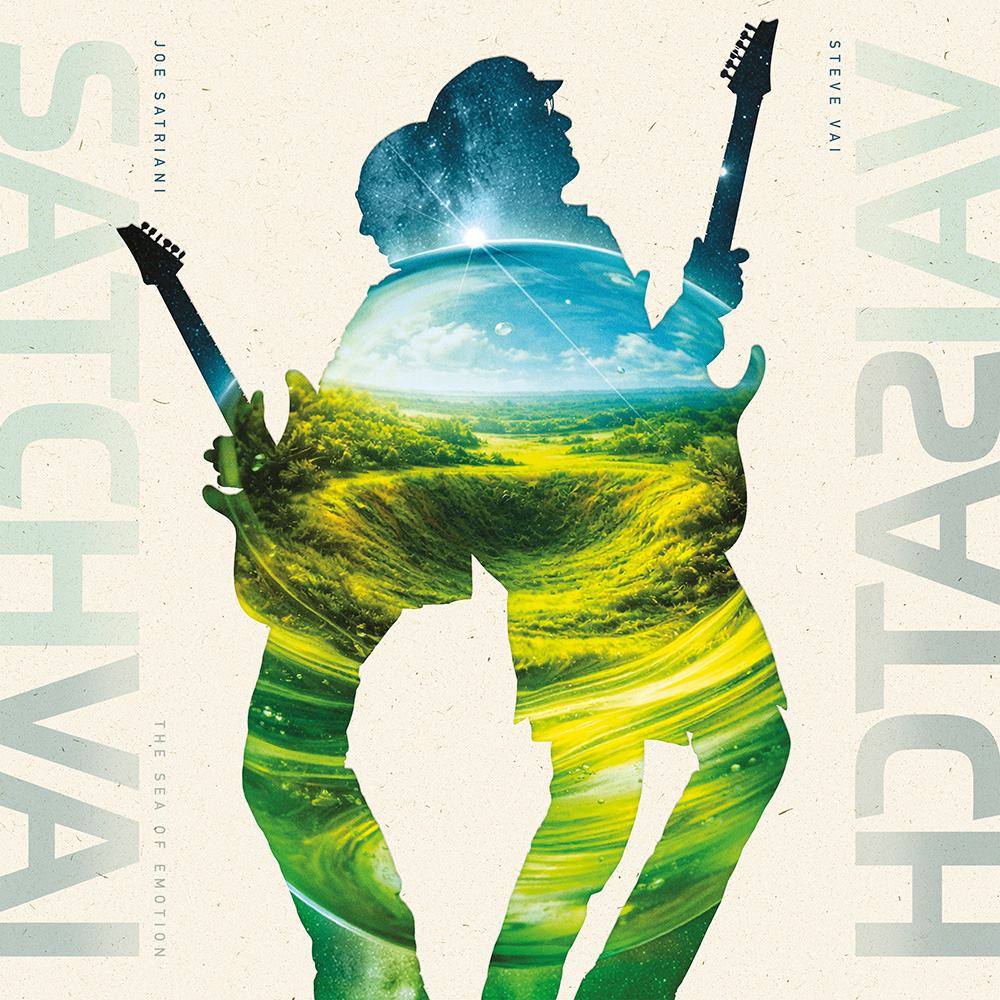
In 1973, in a bedroom on Long Island, a 13-year-old Steve Vai and his 17-year-old guitar teacher Joe Satriani plugged their instruments into modest amplifiers, completely unaware that they were laying the groundwork for a seminal chapter in modern six-string history. There were no cell phones, no computers and no industry expectations – just a shared, consuming passion for the guitar. Decades later, after conquering the globe as solo titans and anchoring the legendary G3 tours, the duo has finally fused their musical DNA into a definitive collaborative studio album, The Sea of Emotion, under the moniker SatchVai.
Though labels and fans had long clamored for a joint record, the project refused to be forced. It required the right cosmic timing, sparked unexpectedly when a G3 reunion tour left a scheduling window open. "We’ve been planning this since 1973," Steve Vai notes with a laugh. "Just unconsciously. It happened organically, but I have to say, someplace in the background we just knew it was going to happen... I was having a premonition my whole life."
What began as a suggestion from management to cut a single track quickly snowballed into an avalanche of creativity. Satriani sent Vai an email containing two finished tracks, titled "The Sea of Emotion, Part 1" and "Part 2." For Vai, the reaction was instantaneous: "I'm just listening and thinking, 'Okay, game on. It's time.'"
For two guitarists who have spent 35 years operating in their own autonomous creative bubbles as producers and solo artists, collaborating required a radical recalibration of their artistic egos. Despite their identical backgrounds, shared influences and synchronized gear preferences, they quickly discovered that their methodologies were starkly contrasting.
"The biggest surprise was that we write in completely different ways," Satriani explains, adding, “and that’s what made the project so fun and interesting. The bouncing back and forth of ideas was always filled with moments where the first time you push play, and you go, 'Oh, I wasn't thinking that was going to happen.' It was the unknown and the proverbial musical slap in the face every time you think you're onto something, but your writing partner throws something back in a completely different direction."
The two found the process both fluid and liberating. The rule of the project was simple: Chop up the tracks, add whatever you want, and if an idea didn't resonate with both players, it was shelved without hurt feelings.
For Vai, who admittedly rarely collaborates when writing songs, the experience left him deeply admiring his longtime friend’s structural sense. "Joe has great instincts for what makes a song a song," he says. "You can write with some people, and you go, 'That’s not even a melody.' But here the melodies were real, and they had personality. We both resonate with similar type soulful melody, and it was so nice to share that with each other.”
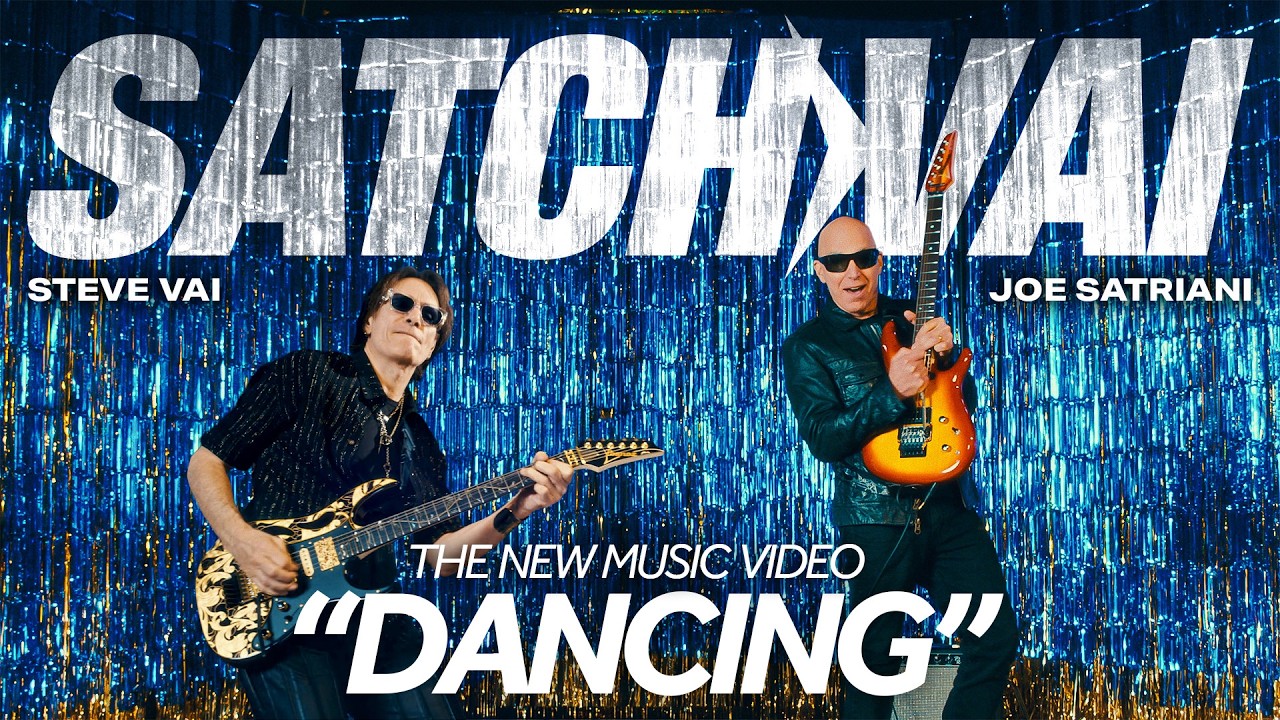
The creative environment was further sharpened by producer and keyboardist Eric Caudieux, who acted as a blunt, honest referee. When Vai attempted to tuck a massive, guitar-generated horn section into the playful track "Dancing" (a beautifully reimagined version of the Paolo Conte classic), Caudieux ruthlessly cut them, telling the guitarist it simply wasn't authentic to his sound. Vai turned to Satriani for support, only to get a definitive "Nope." "I’m like, 'Okay, cut off my toe,'" Vai jokes. "But it turned out it's so much better than if it was the other way. It's funny how sometimes he comes in and just drops an ax."
To build a colossal rhythm section capable of matching the guitarists' intensity, Satch and Vai called on a revolving door of elite inner-circle friends. Powerhouse drummers Gregg Bissonette, Jeremy Colson, Kenny Aronoff, Matt Chamberlain and Mike Mangini traded off behind the kit, while bass duties were anchored by a formidable lineup including Billy Sheehan, Bryan Beller, Philip Bynoe, Matt Bissonette, Marco Mendoza and Henrik Linder.
Rather than diluting their distinct styles, the collaborative pressure forced both virtuosos to push their respective boundaries. Hearing Satriani’s fiery performances on the album's most ominous, heavy tracks compelled Vai to dig deeper into his own eccentric musical identity just to hold his ground. "Joe was in top form" he marvels. "And I'm like, 'Jeez, you're making it hard for me.' I had to raise my own bar to keep up.”
Conversely, Satriani used Vai’s unpredictable arrangements as an opportunity to strip away decades of professional habits. "How do you shed yourself?" he asks rhetorically. "How do you get rid of all the bullshit so that you can just react fresh for the very first time and do something you've never done before?" On the arena-sized anthem "I Wanna Play My Guitar" (which features the unmistakable vocals of legendary singer Glenn Hughes), the duo openly quoted a summation of the very riffs and classic rock textures that captivated them in their adolescence.
In advance of the album, "Dancing," "I Wanna Play My Guitar" and the symbiotic, impressionistic "The Sea of Emotion, Part 1" (the overture of a suite memorializing the Carle Place school field where the two teenagers used to go to hope, dream and philosophize) gave listeners a good idea of what to expect. The full album surpasses even the highest hopes. Sometimes it's way, way over the top, and intentionally so – these guys are the first to admit they're natural-born hams – but much of the time, which is to say all of the time, even when it's scorching the earth, it's achingly, spectacularly beautiful. It's an album that exalts everything the guitar can do, with Satch and Vai wringing every last drop of emotion from their instruments.
"Mayhem" throws down the gauntlet with pure, unfiltered rock 'n' roll attitude. Satriani remembers coming up with the riff in his home studio and thinking how much fun it was to play, even as his internal critic started second-guessing the chord structure. As he recalls, "It’s so adolescent. It’s what would’ve gotten me doing bad things when I was 15 years old, turning that guitar up and my parents yelling at me, 'Turn that down!'" When Satch sent it over with a modest disclaimer – "I know I'm a bonehead, but do you want to do it?" – Vai was instantly relieved by the track's unforced grit, noting that "Joe has that authenticity." To match Satriani's speaker-tearing solo, Vai upped the ante by doubling his own lines, transforming the song into a glorious, high-decibel showdown.
A ferocious, swaggering showcase, "Bronco Freight Train" almost didn't happen until Satriani stepped in to champion its raw power. Satriani recalls hearing Vai's initial idea and thinking, "This is it. You've come to the mountaintop and the king has appeared with his guitar." Vai had worried his original rhythm track felt too ordinary, but when Satriani chopped it up and rebuilt the foundation, everything clicked into place. "That's when it lit up for me," Vai says, "because Joe has a particular way of playing rhythm so that the notes speak a certain way."
That same spirit of fearless experimentation drives "Zoot Suit Riot" (which features Mike Keneally stepping in on keys), a diabolically wild affair where Vai took Satch's opening verse melody and flipped it backward for the second verse. Elsewhere, he slipped in a not-so-subtle, theatrical nod to West Side Story (the soundtrack of which sparked his interest in music as a child). "'Zoot Suit' is actually a track I had sitting around," Vai says. "When you're making a record, there's sometimes checks and balances – you don't want everything in one key or tempo. This one had an odd groove that I've never really used. The way it swings and the way it pounces. And it's such a snotty riff. So I thought, 'I got to send this to Joe and see what he thinks.' It worked out pretty great."
On the dark, cinematic "Old Sins Have Long Shadows," Satriani set out to build a "sexy, slinky, dangerous-sounding riff" that morphs into a heroic chorus – drawing inspiration from Buddy Miles’ straight-ahead drumming on Jimi Hendrix's "Machine Gun" to anchor the groove while the guitars swing around it.
The emotional anchor of the record traces directly back to their shared roots. "The Sea of Emotion, Part 2" opens with a dreamy, delicate nylon-string acoustic intro, while "Part 3" – a razzle-dazzle hot burner – completes the circle by kicking it off with a priceless artifact: a vintage reel-to-reel tape recorded during one of Vai's early lessons, titled "Reflections on a Year and a Half." Vai laughs that "we still can't figure out who played what on the tape," while Satriani points out that the tape captures something timeless about their connection. "It illustrates just how far we've come," he says. "We're these two kids who haven't found our sound yet, but we've got enthusiasm. We're chasing something, and we're determined. I think that's a beautiful thing."
Listening back to the last track, Vai recalls feeling a quiet, profound sense of fulfillment that goes far beyond technique or ego. "That's when I really feel, like, wow, we really did it," he says. "I don't know what the rest of the world will think of the song or the album, but for me, it's a beautiful coming together of me and my friend in a very intimate musical way. That was the reason we did the record."
CREDITS
MUSICIANS
Joe Satriani - guitars, bass, keyboards
Steve Vai - guitars, bass, keyboards
Eric Caudieux - keyboards (1, 3, 3, 7, 8, 9, 10)
Bryan Beller - bass (10)
Matt Bissonette - bass (6, 8, 9)
Philip Bynoe - bass (5)
Henrik Linder - bass (4)
Marco Mendoza - bass (3, 7)
Kenny Aronoff - drums (7)
Gregg Bissonette - drums (1, 4)
Jeremy Colson - drums (2, 6, 10)
Mike Mangini - drums (5)
Glenn Hughes - vocals (7)
Matt Chamberlain - drums (3, 8, 9)
Mike Keneally - keyboards (5)
Derek Day - background vocals (7)
Doug Macarthur - background vocals (7)
Edited by Eric Caudieux
Mixed by Cian Riordan and Eric Caudieux
Mastered by Ryan Smith at Sterling Sound
Produced and Recorded by Joe Satriani, Steve Vai and Eric Caudieux